Showing posts with label problem solving. Show all posts

Spring Resources - and a Freebie!

Happy first day of spring! We may still be buried in snow from the Blizzard of 2017 last week but we are all excited here in upstate New York for spring and warmer temperatures.  We have a few more weeks until spring break here and I wanted to get my classroom feeling like spring even if there is still snow on the ground.  

Last week we created these contraction caterpillars to showcase all we know about contractions.  I'm in love with how bright and springy the Astrobrights papers look!  
I put the template for this caterpillar in my TpT store as a freebie.  I included a list of different ways to use this template in the file as well.   I love crafts that are low prep and can be used in different ways.

From year to year I often change how I use a specific craft depending on where I am in my curriculum and what skills we have mastered and what skills need more work.  Here are two other ways I can see using this craft although I have listed a ton of different ideas in the template.

I'm always looking for different ways to keep my kiddos engaged and practicing their sight words... especially this time of year!  This Beautiful Blooms sight word game is a freebie in my TpT store as well.   Kiddos draw cards and read sight words and the game continues as they kids continue to draw cards.  If the kids draw a "Cold Snap" card they need to put all their card back and start again.
I have also included a sentence version of this sight word game to make the game a bit harder for kiddos that need to be challenged.  This game is also free in my TpT store

I love using these spring themed problem-solving printables as well.  By this point in the year my kiddos are great math problem solvers and I love challenging them with all kinds of word problems.  I keep things fresh and engaging by using spring-themed printables.  I have two different sets of printables as freebies in my TpT store.  Hope you find them helpful!

Happy spring!  Here's to a great first full week of spring!!

0

Five for Friday: Busy, Productive Week

I'm linking up with Doodle Bugs Teaching for Five for Friday!


Here are some highlights from a very busy, productive week from our classroom!

One: Reading Workshop
Last week in my Five for Friday post I talked about the new Lucy Calkins Reading Workshop units.  I'm so in love with the units and this week before moving on to the second bend in the unit we're currently working on, we took some time to reflect on what we've learned as well as areas we would like to work on during our independent reading.  

To help my kiddos remember what we've been working on I took the large anchor chart post its that came with the program, scaled them down, and gave the kids their own "suitcases" to take with them on their reading adventures.  Credit goes to the unit of study... the idea of the suitcases and reading adventure was all theirs.  I laminated each suitcase so they'll last in their book boxes from week to week.

After reviewing what we've been working on I asked the kids to select one area they'd like to work on in the coming weeks.  I feel like I don't do enough reflecting in my classroom and I thought this was a great addition to our workshop time.
  Two: Problem Solving
We begin and end each math workshop session with problem solving.  To begin each session we work on an application word problem with a buddy.  I like to see my kiddos talking math with one another and I like that buddies can help one another.  But I also want to see where each of my students is in terms of problem solving ability.  

That being said I've created a bunch of problem solving printables that I use each day in my classroom.  This week we worked on some winter themed word problems.  I always include result unknown, change unknown, and start unknown word problems and my kiddos are getting good at solving each kind. I've seen what practice can do and I'm so proud of my kiddos!


Three: Groundhogs
We read these two great books about groundhogs this week to celebrate Groundhogs Day on Tuesday.  My kiddos loved the Groundhogs Get a Say book... actually I really loved it too!  Tons of facts in it but done in a really fun way.  

After reading these books I had my kiddos write about something they learned from these books.  Many of my kiddos couldn't get over the fact that groundhogs breathe once every 5 or 6 minutes when they hibernate... they thought this was THE coolest thing ever!!

Four: Valentine's Day Math Journals
I wish Valentin's Day fell at the end of the month... I feel so rushed to fit everything Valentine's Day into just two weeks!  Here's a sampling of our Valentine's Day math journals we completed this week!


Five: Horrible Harry
I randomly selected a Horrible Harry book for a read aloud a few weeks ago and my kids are HOOKED!  They cannot get enough.  Last week we finished a book about Harry's teacher getting engaged and the story continued into a book our school library or the public library did not have!  The kids begged me to get the book somehow... Amazon Prime to the rescue.  The book arrived this afternoon and the kids are so excited to start it Monday!

He is not wielding a knife... I promise!


Have a great weekend... Happy Super Bowl!!

Let's Go Broncos... I prefer the other Manning Brother (Eli) since I'm a Giants fan but no such luck this year so I'll take the next best thing, his older brother!!

  
1

Five for Friday

I'm linking up with Doodle Bugs Teaching for Five for 
Friday.  Another week in the books and I'm so proud of my kiddos... they are working so hard and we're having some much fun together!
  

Here are some highlights from our week! 

ONE: Problem Solving 
We begin every math workshop session with an application word problem.  This week we began using these problem solving work mats.  The kids did a great job using these math tools to help them solve word problems.  I was very proud.  If you'd like more information about how I run my math workshop block, here is a link to a post I did over the summer.  

TWO: Calendar
This week we also began using our calendar workmats.  They were a big hit last year and I was so excited to begin using them again this year.  I waited a few days to introduce them until I felt the kids were ready.  I love how these mats add some math and ELA skills to morning meeting/calendar time.  This is the mat we'll use for now.  As the year goes on we'll add more skills and we'll complete two calendar pages.  We have not attempted the sentence fix it yet... possibly next week... we'll see how it goes!
  

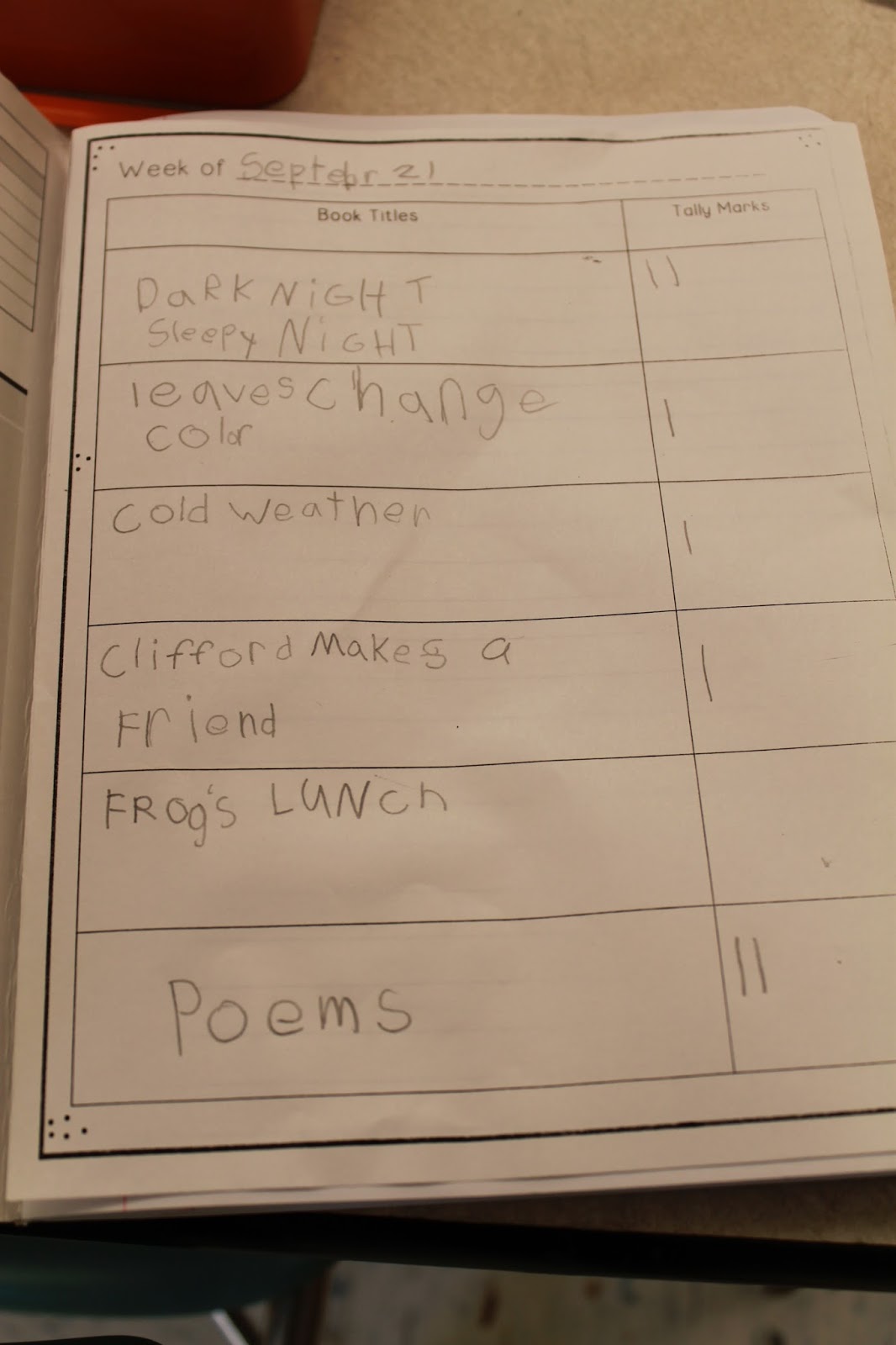
  THREE: Book Logs
In previous years I've tried book logs and it was just something that I didn't think worked very well.  I thought my kids wasted too much time writing titles of books when all I wanted was for them to be reading during our reading workshop block.  After reading the Literacy Teacher's Playbook by Jennifer Serravallo I was determined to make them work this year.  

Using some ideas in the book I think I found a format that will work.  The kids did a great job writing their book titles for the first time this week and I think this will only get easier as the year goes on.  

FOUR: Writing Workshop 
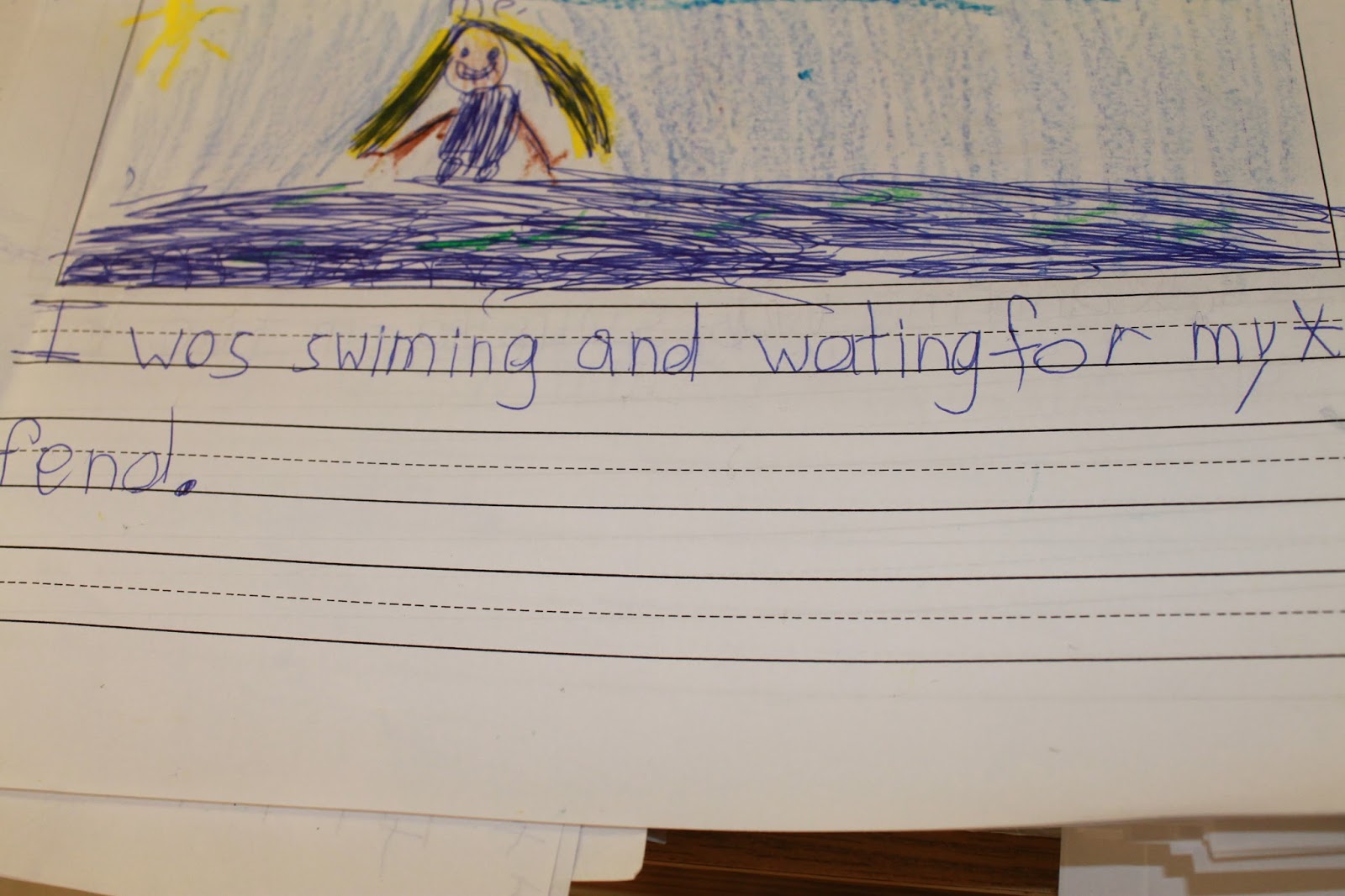
Our writing workshop block is off to a great start.  My kids have really embraced the writer's life and they are so excited to write their own stories each day.  This week we really focused on touching and telling before sketching and writing across the pages.  I'm so impressed by the quality of writing that is produced when the kids use this method.  Next week we're going to focus on zooming in.  This can be difficult for some and something we'll work on all year but I'm so excited to get started.  


Five: Organization Tip
Can I tell you how excited I get when I open up a book to read aloud and I find some lesson ideas or a worksheet we've completed in previous years inside the book.  I have binders full of work and lesson ideas that I use on a weekly basis but there are always those stand alone read alouds that have a lesson or worksheet that go with it.  I was never really sure where to put these worksheets/ideas because they never really fit with the ELA units I have in binders.  

So I came up with this idea... stick the lesson idea or worksheet inside the book so when I pull the book the next time I know exactly how I used the book for a previous lesson.  It's always a nice surprise!  And... the kids love this book!  They couldn't stop laughing!


Have a great weekend.  Don't forget to visit Doodle Bugs Teaching!
3

Math Workshop Must Haves

Math workshop is probably my favorite time of our day.  This 75 minute block allows for a ton of math skills to be practiced each day.  There are a few materials that I go to again and again and I wanted to share them so perhaps you can use them for the upcoming school year.  

Problem Solving Work Mat:
Our workshop block always begins with a word problem and I typically have the kids solve the problem on these work mats.  I like to see their math thinking and this work mat allows me to circulate and take notes for individual students. I can also do some reteaching or provide extra help as the class is solving the problem on their mat.

 To save paper I put the work mats in page protectors.  I use page protectors rather than laminate the pages because it's easier to erase expo marker from the page protectors than the lamination. Instead of whiteboard erasers I use socks.  They work just as well and they're a lot cheaper.  


Math Tub Storage:
I purchased these tubs from Walmart two years ago and it was a great investment.  The tops snap on which is great because if the tub is dropped the materials don't go flying everywhere.  The tubs are also big enough to place papers in without bending the pages.  They're also deep enough to store manipulatives that need to be included.  I love placing all the materials in one tub for the kids because it's easier for them to know exactly what they'll be using. The best part... they only cost $3.88 a piece!    


When we've finished using a tub I put the materials in a manila clasp envelope and label the envelope so it's easy to access it later on.  I tried storing tub games in a filing cabinet but a full filing cabinet is a nightmare to open and close so I decided on a crate.  It works perfectly and allows me easy access to all the tub games. 


I also place a list of tub games in my planner so I know exactly what tubs I can pull from when I'm planning from week to week.


Math Game Materials:  
Dice:  There are so many great ways to use dice during math workshop.  You can add, subtract, figure out what number comes next, determine if a number is odd or even as well as many other activities.  I love using dice because all the kids need is a different recording sheet and the dice can be used in multiple ways! 

I purchased these dice (38 dice) on Amazon for $10 a few weeks ago and I picked up this nail storage container at Lowe's for $3.  


These polyhedral dice were purchased by the PTO at my school at the end of this past school year and I can't wait to use them during my math block as well.  I think these would be great for partner games as well as some whole group fluency games we play during math block transitions.    


I also got these foam dice on Amazon this summer... sometimes it's nice to have the kids use "quiet" dice when the room gets a little too loud!


Dominoes: Dominoes are also a must have in my classroom.  They can be used much like dice during math block... all you need are different recording sheets.

Playing Cards:  Probably my kids favorite game from last year was a game called "Addition Battle".  Any time I set this game out the kids went nuts.  The game is simple but a great way to practice addition skills all year.  

I set out a deck of cards and each player draws two cards.  Each player finds the sum of their two cards and then the player with the higher sums takes all the cards.   With some kids I have them record their sums on a work mat before determining who has the higher sum.  

The winner is the player with the most cards at the end of the game!  This is a game that's easy to differentiate as well.  The kids can add three numbers before comparing, they can record and sort their sums based on whether the sum is odd or even, they can even build two digit numbers to add before comparing the sums.  


Playing cards can also be used to compare numbers, subtract numbers, and find what numbers come before and after.  There are so many options for playing cards and the games don't require a ton of prep!!

Independent Problem Solving Printables:
To give my kiddos independent problem solving practice each day we used these themed printables.  The printables include all three types of word problems (result unknown, change unknown, start unknown) and when printed back to back, offer two days of problem solving practice that I can look at and make notes if necessary for individual students. 


Thanks for letting me share with you some of my math workshop must haves!! 

0

Problem Solving Practice: Part 2


I've been blogging about my attempts to add more meaningful problem solving practice into our daily routines.  On Tuesday I blogged about the whole group problem solving practice we do each day.  Today I'll be showing you how I incorporate independent problem solving practice into our math workshop block.  

I love the whole group practice we get each day because it allows for some great modeling and math talk as we work through various word problems.  However, I wanted a more individualized way to assess where kids are.  I wanted to see how each student was progressing as we tackled more complex word problems throughout the year.  I wanted to see what each child's strengths and weaknesses were related to problem solving and I wasn't sure I was getting a true sense of their abilities during the whole group time.

So I decided to create some problem solving printables that I could use at the end of each workshop block to see how my kids were doing.  I saw how motivated the kids were by word problems that included their names and interests so I knew I needed to incorporate that some how.  

Knowing I wanted to put these printables on TPT I knew using the names of my kiddos might not be that meaningful to others so I decided that I could incorporate themes and scenarios any first grader could relate to and would be by motivated by.  I began looking through my clip art collections and came up with some different themes I thought could work as problem solving printables.  


Thanks to the wonderfully talented artists on TPT I was able to create these printables that my kiddos have enjoyed using at the end of our math block.  The kids know to grab an office and find a place to work independently to solve a word problem each day.

.  Typically I have the kids solve on problem per day.  I check the word problem right away and I like the instant feedback... I can send kids back to their seats to make corrections right away or I can pull some kids to the side if they need some extra help.  If we need to finish the other side the next day I'll save the worksheet for the the following day.  

The same steps are used as they work through these problem independently... they read the problem twice, circling what they know and underlining what they need to solve for.  This strategy has really worked for them this ear.    


Each printable has a question as well as a work space box, number sentence box, and an answer box.  Some of the printables have either a number bond or part-part-whole model.  I have also included some word problems without a model to allow my kids to choose the model they want to use.  They know that if there isn't a model they need to draw one and fill it out correctly.  


In each problem solving pack I have included a table of contents indicating which pages include the different kinds of word problems... result unknown, part unknown, or start unknown.  I have found this helpful because it is easy to print and copy exactly the pages my kiddos need practice with.  


While I typically print out the black and white versions of the word problems and then copy them back to back, there are other ways to use these printables aside from end of workshop block mini-assessments/practice.  

The colored version of these printables could be printed and laminated or put in page protectors.  Then the pages can be put in a tub for math tub time.  The colored version can also be displayed on the Promethean board for whole group problem solving practice.  There are many different ways to utilize these printables.


Some of the themes currently in my TPT store include Construction, Pet Shop, and Rainy Day.  I have a ton of ideas for new problem solving printables that I'm hoping to get to over the summer!  

If you are interested in these printables and would like to try them, I have two freebies available in my TPT store.  The Rainy Day Printables as well as a small Construction Pack are available in my store to try.  


Problem Solving Printables

Happy Problem Solving!!

0

Problem Solving Practice: Part 1


We all know that problem solving is a large part of common core and this year I made it my mission to add as much problem solving practice into our daily routines as I could.  As we have progressed through the year I have been impressed by my kiddos ability to problem solve in math and I'm so excited to share with you the different ways I incorporate problem solving into our daily math workshop block!

Today I will show you the daily whole group practice that I incorporate into our math block.  On Thursday I'll show you the independent practice my kids get each day with some problem solving printables I have created!!


Each day we begin our math workshop with problem solving practice.  Even if our math block has to be shortened I always include a word problem at the beginning of the lesson.  

On a good day we do two word problems... the first word problem we solve together as a class.  I like to use the first word problem to model "math talk" or "math thinking" and I try to make sure the word problems match what we've been working on in previous days.  For example, if we learned about doubles the day before then the word problem would includes a doubles fact in it.  The second word problem is used for independent practice.  The kids either work on it independently or in a small group.  

To begin we read each problem twice, the first time to get the "gist" and the second time to determine what we know. Then we go through the word problem to circle what we know as well as underline the question.  We do this every time and I expect the kids to do it when they are working independently as well.  


We are lucky enough to have Promethean boards in our classrooms and this allows me to display our daily word problems on the board. If you don't have a Promethean board you can always write the word problems on a white board or even chart paper.  Any way to make it big so your kiddos can see it and interact with it is a good idea!

After reading the word problem twice we use what we know (what we circled) to fill in a model.  We have been using both a part-part-whole model as well as a number bond model. This has transformed problem solving this year!  The kids really "get" how to solve the word problem when they see what they have... whether they have two parts and need to solve for the whole, or have the whole and a part and need to find the other part.  When they are working independently at this point in the year I let them pick which model they want to use.  During the beginning of the year I have them use what we introduced to give them some practice with both before allowing them to choose.      

After filling in a model we solve the word problem.  If this is the first problem we solve it together on the board.  If it's the second problem there are few different ways we go about working on it.  

Sometimes I have the kids turn and tell their learning partner how to solve the problem.  I love hearing the "math talk" during this time.  We used this especially when we were adding and subtracting tens.  The mental math was easy for the kids and I loved hearing them talk about the different ways to solve the problem.  


Other times I have the kids use their work mats to solve the problem.  This allows me to visit the few kids I think may need some help.  My fast finishers know to turn their work mat over and practice doubles facts or other addition and subtraction number sentences.  

After I can see everyone is finished we review it on the board.  I usually have a kid come up to "teach" the class.  Then I ask for other ways to solve the problem... the kids are always fascinated by the fact that the word problem can be solved in different ways.


When it comes time to label the answer we always go back to the question we underlined ... this has helped my kids understand how they need to answer the question and how they need to label their answer.  

This work mat is available in my Teachers Pay Teachers store for free.  I print the mats on card stock and then put them in sheet protectors so they can be reused.  I like using the sheet protectors rather than laminating because expo marker erases much easier from sheet protectors than from lamination.  To erase expo marker from lamination the eraser needs to be wet... this gets messy!!


 The word problems I create always include a students' name or our class in some way and I make sure the scenarios in the word problem are related to something the kids know or something that could happen at home or at school.  The kids love seeing their names in word problems and it keeps all the kids engaged and involved.

I have truly enjoyed this time during our math block each day.  It's the culmination of everything we've done and learned each day and I truly believe this daily practice has helped them become strong problem solvers.  

Check back on Thursday for the second part of this post... independent problem solving practice!

0
Back to Top